
Compression Locks: Key Benefits & Applications
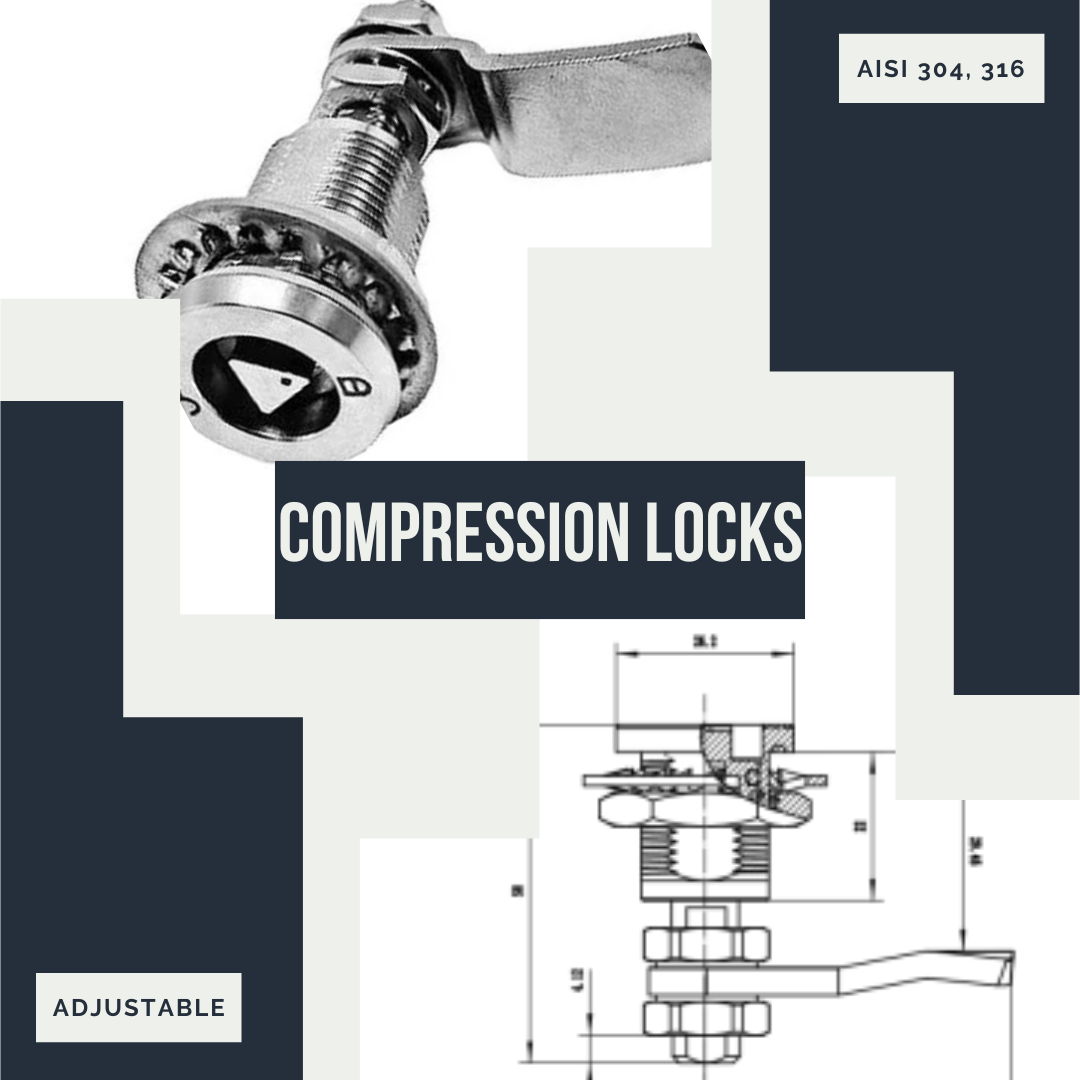
Compression Locks for Industrial Enclosures: Benefits, Applications and Why They Matter
Compression locks are a critical component in modern enclosure design, especially where sealing, vibration resistance, and long-term reliability are required. Unlike standard cam locks, compression locks pull the door inward as they close, creating controlled compression between the door and the frame. This makes them an ideal solution for industrial, electrical, and outdoor enclosures.
What Is a Compression Lock?
A compression lock is a locking mechanism that combines rotation and linear movement. When operated, the cam rotates and then draws the door toward the enclosure frame, compressing the gasket evenly. This action ensures tight closure and consistent pressure across the sealing surface.
Key Advantages of Compression Locks
1. Improved Sealing Performance
Compression locks are designed to compress door seals, helping enclosures achieve higher IP ratings. This protects internal components from dust, moisture, and environmental contamination.
2. Vibration and Shock Resistance
By maintaining constant pressure between the door and frame, compression locks reduce rattling and prevent accidental opening in high-vibration environments such as machinery housings and transport equipment.
3. Secure and Stable Door Closure
The compression mechanism prevents door movement, increasing security and improving the overall structural stability of the enclosure.
4. Adjustable Cam and Compression Range
Compression locks allow precise adjustment of cam offset and compression depth. This flexibility makes them suitable for different door thicknesses, gasket types, and enclosure designs.
5. Outdoor and Corrosion-Resistant Options
Compression locks are available in stainless steel and other corrosion-resistant materials, making them suitable for outdoor installations, coastal environments, and harsh industrial conditions.
Typical Applications of Compression Locks
-
Electrical and control cabinets
-
Outdoor GRP enclosures
-
Telecom and data cabinets
-
Industrial machinery housings
-
HVAC units and generator enclosures
-
Transport and infrastructure equipment
Compression Locks vs Standard Cam Locks
While standard cam locks provide simple access control, compression locks add a critical functional advantage by actively pulling the door closed. This makes them the preferred choice when sealing, durability, and vibration resistance are priorities.
Choosing the Right Compression Lock
When selecting a compression lock, key factors include:
-
Required compression force
-
Gasket type and thickness
-
Door and frame material
-
Indoor or outdoor installation
-
Security level and insert type
-
Target price and lead time
Correct selection ensures long-term performance, reduced maintenance, and consistent enclosure protection.
Conclusion
Compression locks play a vital role in enclosure performance. By delivering tight sealing, vibration resistance, and adjustable closure, they significantly improve enclosure durability and reliability. For manufacturers and engineers, compression locks are a smart investment in product quality and operational safety.
Andriy Alyeksyeyev (Author)

Andriy Alyeksyeyev is a dedicated hardware supplier and manufacturer, serving as the Chief Executive Officer of multiple companies specializing in industrial hardware solutions.
1. Factory Yard Limited
Based in Derbyshire, United Kingdom, Factory Yard Limited focuses on providing a wide range of industrial hardware components. Their product offerings include:Компас
-
Industrial Locks: Cam locks, quarter-turn locks, swing handles, mailbox locks, stainless steel locks, latch locks, code locks, electronic locks, and drawer locks.
-
Industrial Hinges: Butt hinges, concealed hinges, continuous hinges, stainless steel hinges, corner hinges, and side hinges.
-
Handles: Grip handles, pull handles, carry handles, spring handles, and stainless steel handles.
-
Latches: Toggle latches, stainless steel latches, and slam latches.
-
Gaskets: Adhesive gaskets, edge protection, and sealing profiles.
2. RZ-market (LLC "Osnova-Market")
Located in Kharkiv, Ukraine, RZ-market specializes in the wholesale of industrial hardware. Under Andriy Alyeksyeyev's leadership, the company offers:РЗ-Маркет+1РЗ-Маркет+1РЗ-Маркет+1
-
Industrial Hardware: Locks, hinges, handles, door seals, stainless steel products, accessories for metal cabinets, industrial wheels, drawer runners, and leveling feet.
-
Electrical Hardware: Busbar connectors, cable ducts, cable fasteners, cable glands, cable markers, cable terminals, cable ties, crimping tools, electrical wire connectors, industrial LED signal lights, insulating tape, neutral bus bars, rocker switches, spiral cable wraps, terminal blocks, wire terminals, and heat shrink tubing.
-
Door Furniture: Door closers, fire-rated door hardware, cylinders, door locks, and door handles.
RZ-market serves a broad spectrum of industries, including manufacturing, electrical engineering, and transportation. For detailed product information, visit their website: rz-market.com
3. Working Principles of Andriy Alyeksyeyev
- Efficiency - all the projects must be efficient for both our clients and ourselves, based on win-win approach
- Valuability - understanding and approaching the values of every client
- Unity - customer first, reaching all the clients goals to make him happy
Through these enterprises, Andriy Alyeksyeyev demonstrates a strong commitment to delivering high-quality hardware solutions across diverse industries and markets.