
Heavy-Duty Door Stay Load Rating & 4mm Stainless Steel
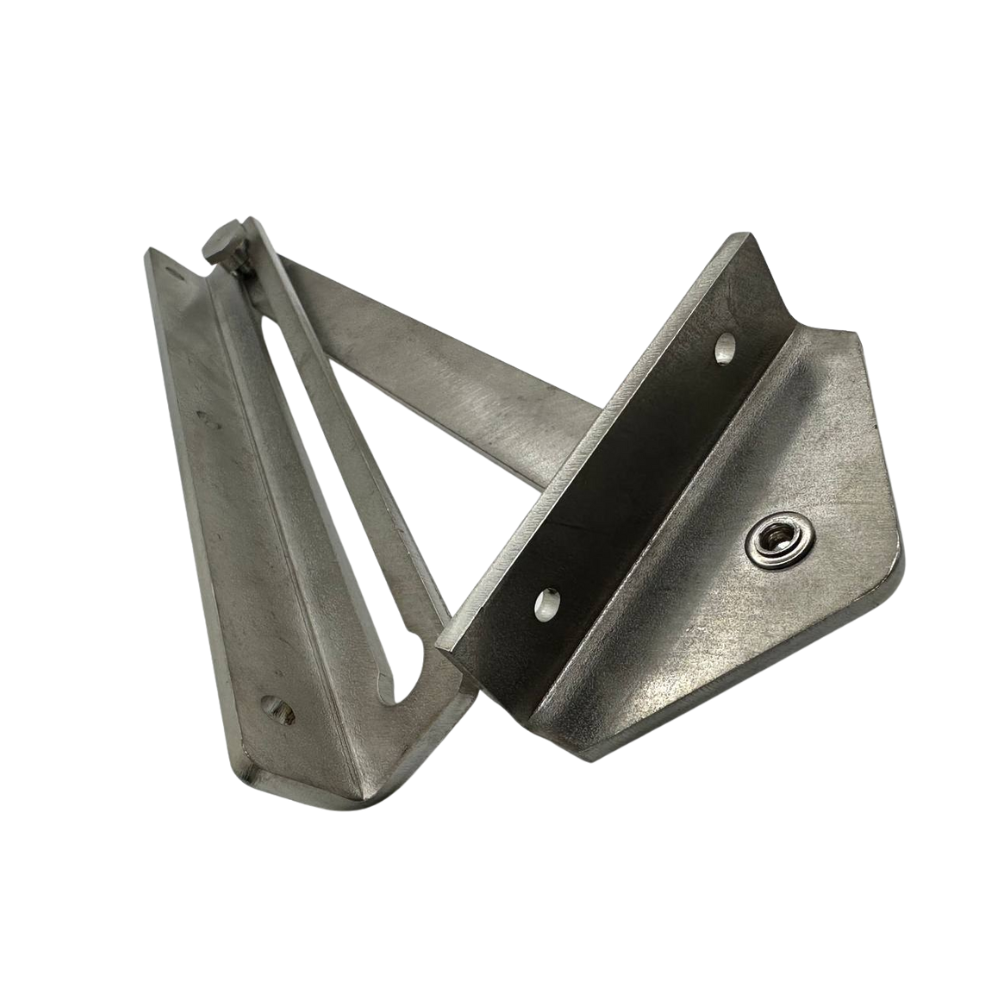
Heavy-Duty Door Stay Load Rating: Why 4 mm Stainless Steel Thickness Matters
Choosing the right heavy-duty door stay is essential for reliable door support, safe operation and long-term performance in industrial environments. Whether you manufacture metal enclosures, equipment cabinets, access panels or transport bodies, the strength of the door stay should match the demands of the application.
One important design consideration is material thickness. Factory Yard's 4 mm thick stainless steel door stay is designed around robust construction, making thickness a key feature to consider when selecting hardware for demanding applications.
But does a thicker door stay always have a higher load rating? And what should buyers check before choosing a door stay for a heavy door?
What Is a Heavy-Duty Door Stay?
A heavy-duty door stay is a mechanical support component designed to help hold a door, lid or access panel in an intended open position or restrict its movement, depending on the product design.
Door stays are used across a wide range of industrial and commercial applications, including:
-
Industrial cabinets and metal enclosures
-
Electrical and control equipment cabinets
-
Machinery access doors and service panels
-
Commercial and industrial storage units
-
Vehicle, van and trailer compartments
-
Equipment housings and technical access panels
-
Custom-fabricated metal structures
The correct door stay depends on the door's dimensions, weight, opening angle, mounting arrangement and operating conditions. A product suitable for one application may not be suitable for another, even when the doors have similar weights.
Why 4 mm Material Thickness Matters
Material thickness is one of the important factors influencing the stiffness and structural performance of a metal door stay.
A 4 mm thick stainless steel door stay offers a substantial material section for applications where robust construction is a priority.
1. Improved structural stiffness
For a comparable design and material, increasing the thickness of a component can improve its resistance to bending and deformation. This can be particularly important when a door stay experiences repeated forces during opening and closing.
The actual improvement depends on the component's shape, unsupported length, bends, holes and loading direction.
2. Support for demanding applications
Industrial doors and access panels can experience different forces depending on their size, weight, hinges, installation position and how they are operated. A robustly constructed door stay can form part of a reliable support arrangement when correctly selected and installed.
3. Better resistance to deformation under appropriate loads
A thicker section may provide greater resistance to bending than a thinner section of otherwise comparable geometry. However, the complete assembly must also be considered. Mounting holes, fasteners, joints and the supporting door or cabinet panel can be the limiting points.
4. A practical feature for technical buyers
For purchasing teams, engineers and OEM manufacturers, material thickness is a measurable specification that can be compared between products. It is more useful than relying on descriptions such as “heavy duty” alone.
When specifying a door stay, ask suppliers to confirm the actual material thickness, stainless steel grade, dimensions, mounting arrangement and any available load or durability test results.
Does a Thicker Door Stay Have a Higher Load Rating?
Not necessarily. Thickness can contribute to strength, but it does not establish the load rating on its own.
The load capacity of a door stay depends on several design and installation factors:
-
Material grade: Different stainless steel grades have different mechanical and corrosion-resistance properties.
-
Material thickness: This affects stiffness and resistance to deformation.
-
Component geometry: Length, width, bends, section shape and hole positions influence how forces are distributed.
-
Mounting points: Fasteners and the material into which they are installed must withstand the applied forces.
-
Door dimensions and weight: A wider or heavier door can create greater leverage on its support hardware.
-
Opening force and external loads: Wind, vibration, impact and user operation can introduce additional forces.
-
Product design and testing: The complete assembly's performance must be assessed under appropriate conditions.
For this reason, a door stay should not be assigned a load rating based on its thickness alone. A reliable rating should be supported by a defined test method or engineering assessment for the relevant configuration.
How to Select a Door Stay for Different Door-Opening Forces
Door-opening force is an important consideration when specifying support hardware. A door that is pushed open forcefully, exposed to wind or subject to vibration may place different demands on a stay from a small, manually operated cabinet door.
Before selecting a product, consider the following.
Door weight and dimensions: Record the door's weight, height and width. Door width is particularly relevant because it affects the leverage acting on the mounting points.
Opening angle: Confirm the required opening angle and whether the stay is intended to hold, limit or control movement.
Operating environment: Consider moisture, cleaning chemicals, outdoor exposure, temperature and vibration.
Installation geometry: Check the distance between mounting points, the direction of loading, fastener specifications and the strength of the supporting structure.
Operating frequency: A door used many times each day may require additional attention to durability and wear.
Available performance data: Where a defined load capacity is required, request test results or technical documentation for the exact product and installation configuration.
A thicker component can help improve structural stiffness, but it cannot guarantee compatibility with every door or opening force. Correct product selection and installation remain essential.
Stainless Steel Material for Industrial Door Stays
Stainless steel is widely used in industrial hardware where corrosion resistance, durability and ease of maintenance are important.
Depending on the grade and environment, stainless steel can be suitable for cabinet hardware used indoors, outdoors and in other demanding settings.
When specifying stainless steel door stays, buyers should confirm the exact grade rather than assuming that all stainless steel offers the same performance. For example, AISI 304 and AISI 316 have different corrosion-resistance characteristics, and the most appropriate option depends on the environment.
Surface condition, cleaning practices, contact with other metals and exposure to chlorides can also affect corrosion performance.
Factory Yard supplies stainless steel door stay options for industrial hardware applications, including different lengths to suit project requirements.
Explore our products:
Which Standards Are Relevant to Door Stay Selection?
Standards help buyers understand material specifications, performance testing and corrosion resistance. However, it is important to distinguish between a standard covering a raw material and one covering a finished hardware product.
EN 10088 – Stainless steel material specifications
The EN 10088 series covers stainless steel grades and material requirements. Relevant parts address stainless steel composition and technical delivery conditions for different product forms.
This series can help establish the material specification, but compliance with EN 10088 alone does not certify the load capacity or durability of a finished door stay.
EN 1670 – Corrosion resistance of building hardware
EN 1670 specifies corrosion-resistance requirements and test methods for building hardware, including relevant hardware for doors and windows. Its classification system is based on corrosion performance, including neutral salt spray testing.
A corrosion-resistance grade should only be claimed where the applicable product or assembly has been tested and the supporting evidence is available.
EN 13126-6 – Variable-geometry stay hinges
EN 13126-6 addresses requirements and test methods for variable-geometry stay hinges, with or without friction stays, used in its defined window and door-height-window applications.
It should not automatically be presented as the applicable standard for every industrial cabinet door stay. Confirm the product's intended use and the standard's scope before claiming compliance.
Important: Factory Yard recommends confirming the relevant standard, test method and evidence with the manufacturer for the specific door stay. Do not assume that a material specification or a general product description establishes certification or a verified load rating.
Why Choose Factory Yard for Industrial Door Stays?
Factory Yard supplies industrial hardware for cabinet manufacturers, engineering businesses, equipment manufacturers, maintenance teams and trade customers across the UK and Europe.
Our product range includes heavy-duty stainless steel door stays in different lengths, alongside other cabinet and enclosure hardware.
When sourcing door stays for a project, we recommend comparing the actual specifications rather than relying on product names alone. Material thickness, stainless steel grade, dimensions, mounting details and verified performance data can all help determine whether a product is suitable for the application.
We can discuss requirements for repeat purchasing, batch supply and OEM projects, subject to product availability and technical specifications.
Looking for a heavy-duty stainless steel door stay for your next project? Contact Factory Yard to discuss your application, required dimensions, material preferences and quantity requirements.
Frequently Asked Questions
1. Does 4 mm thickness make a door stay stronger?
A 4 mm thick section can provide greater stiffness and resistance to bending than a thinner section of otherwise comparable design. However, actual strength depends on the material grade, geometry, mounting points and applied forces.
2. What is the load rating of a 4 mm stainless steel door stay?
There is no universal load rating for all 4 mm stainless steel door stays. The rating must be established for the specific product design and tested or assessed under defined conditions. Request the manufacturer's technical data before using a product for a load-critical application.
3. Can a heavy-duty door stay work with any door-opening force?
No. A door stay must be suitable for the door, installation and operating conditions. Opening force, wind, impact, vibration and door leverage can all affect the forces experienced by the hardware. Select a product with suitable verified performance data for the intended application.
4. Is stainless steel suitable for outdoor door stays?
Stainless steel can be suitable for outdoor applications, but performance depends on the grade and exposure conditions. Confirm the grade and consider exposure to salt, chlorides, moisture and cleaning chemicals when selecting hardware.
5. Is AISI 304 or AISI 316 better for a stainless steel door stay?
AISI 304 is used in many general-purpose applications. AISI 316 generally offers improved resistance to chloride-related corrosion and may be more appropriate in marine or more aggressive environments. The correct choice depends on actual exposure and maintenance conditions.
6. Which standards should I check when buying a door stay?
Check the material specification and ask whether relevant product-performance or corrosion tests have been carried out. EN 10088 relates to stainless steel materials, EN 1670 addresses corrosion resistance for building hardware, and EN 13126-6 applies to defined variable-geometry stay hinges. Not every standard applies to every industrial door stay.
7. How do I choose between a 300 mm and a 500 mm door stay?
Compare the required opening angle, door dimensions, mounting positions, available clearance and the product manufacturer's installation guidance. Length alone does not determine load capacity or suitability.
8. Can Factory Yard supply door stays for OEM and bulk orders?
Factory Yard supplies industrial hardware for trade and OEM requirements. Contact us with your required dimensions, material, application and quantity so that availability and technical suitability can be discussed.
Conclusion: Specify Thickness, Verify Performance
A heavy-duty door stay should be selected on the basis of its complete design, material specification and intended application. The 4 mm material thickness of a door stay is an important structural feature, but a verified load rating requires more than a thickness measurement.
For reliable door support, consider the door's dimensions, weight, opening forces, mounting points and operating environment, and request appropriate technical evidence where required.
Explore Factory Yard's range of heavy-duty stainless steel door stays and stainless steel industrial hardware for your next cabinet, enclosure or equipment project.
Products

Andriy Alyeksyeyev (Author)

Andriy Alyeksyeyev is a dedicated hardware supplier and manufacturer, serving as the Chief Executive Officer of multiple companies specializing in industrial hardware solutions.
1. Factory Yard Limited
Based in Derbyshire, United Kingdom, Factory Yard Limited focuses on providing a wide range of industrial hardware components. Their product offerings include:Компас
-
Industrial Locks: Cam locks, quarter-turn locks, swing handles, mailbox locks, stainless steel locks, latch locks, code locks, electronic locks, and drawer locks.
-
Industrial Hinges: Butt hinges, concealed hinges, continuous hinges, stainless steel hinges, corner hinges, and side hinges.
-
Handles: Grip handles, pull handles, carry handles, spring handles, and stainless steel handles.
-
Latches: Toggle latches, stainless steel latches, and slam latches.
-
Gaskets: Adhesive gaskets, edge protection, and sealing profiles.
2. RZ-market (LLC "Osnova-Market")
Located in Kharkiv, Ukraine, RZ-market specializes in the wholesale of industrial hardware. Under Andriy Alyeksyeyev's leadership, the company offers:РЗ-Маркет+1РЗ-Маркет+1РЗ-Маркет+1
-
Industrial Hardware: Locks, hinges, handles, door seals, stainless steel products, accessories for metal cabinets, industrial wheels, drawer runners, and leveling feet.
-
Electrical Hardware: Busbar connectors, cable ducts, cable fasteners, cable glands, cable markers, cable terminals, cable ties, crimping tools, electrical wire connectors, industrial LED signal lights, insulating tape, neutral bus bars, rocker switches, spiral cable wraps, terminal blocks, wire terminals, and heat shrink tubing.
-
Door Furniture: Door closers, fire-rated door hardware, cylinders, door locks, and door handles.
RZ-market serves a broad spectrum of industries, including manufacturing, electrical engineering, and transportation. For detailed product information, visit their website: rz-market.com
3. Working Principles of Andriy Alyeksyeyev
- Efficiency - all the projects must be efficient for both our clients and ourselves, based on win-win approach
- Valuability - understanding and approaching the values of every client
- Unity - customer first, reaching all the clients goals to make him happy
Through these enterprises, Andriy Alyeksyeyev demonstrates a strong commitment to delivering high-quality hardware solutions across diverse industries and markets.