
Multi-Functional Parts: Locking Hinges, Handles & Latches
Multi-Functional Enclosure Hardware: A Growing Trend in Industrial Design
In modern enclosure design, efficiency is no longer optional — it is expected. Engineers and manufacturers are increasingly looking for ways to reduce complexity, save space, and optimise costs without compromising performance.
One of the fastest-growing trends addressing these needs is the use of multi-functional hardware — components that combine two or more functions into a single, integrated solution.

What is Multi-Functional Hardware?
Multi-functional hardware refers to components that perform more than one role within an enclosure system. Instead of installing separate parts for each function, a single product can handle multiple tasks.
Typical examples include:
- Locking hinges – combining door support and security
- Locking handles – providing access and locking in one unit
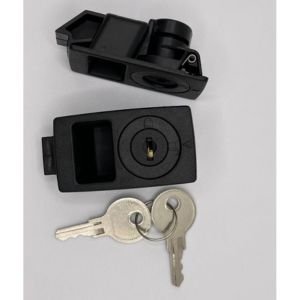
- Locking latches – securing and closing the door simultaneously
Why This Trend is Growing
1. Reduced Component Count
Fewer parts mean simpler designs, faster assembly, and reduced inventory requirements.
2. Cost Efficiency
Combining functions into one component reduces both material costs and installation time, making it an attractive solution for large-scale production.
3. Space Optimisation
In compact enclosures such as telecom cabinets or control panels, saving space is critical. Multi-functional components help maximise usable internal and external space.
4. Improved Reliability
Fewer connection points and components reduce the risk of failure, leading to more reliable long-term performance.
Key Applications
Multi-functional hardware is particularly valuable in:
- Telecommunication cabinets
- Electrical enclosures
- Industrial control panels
- Outdoor infrastructure housings
These environments demand both durability and efficiency, making integrated solutions a natural fit.
Examples of Multi-Functional Solutions
Locking Hinges
Eliminate the need for separate locking systems by integrating security directly into the hinge mechanism. Ideal for applications requiring controlled access with minimal hardware.
Locking Handles
Provide ergonomic operation combined with secure locking. Widely used in industrial enclosures where ease of use and security are equally important.
Locking Latches
Offer a cost-effective solution by combining door closing and locking functions. Perfect for telecom and general-purpose enclosures.
System Integration
For best results, multi-functional hardware should be combined with high-quality supporting components:
This ensures a complete and reliable enclosure system.
Compliance & Standards
Industrial hardware must meet recognised quality and safety requirements. Our products are aligned with:
- UKCA Marking – compliance with UK regulations
- BSI Standards – ensuring consistent quality and performance
Material Considerations
Material selection plays a key role in performance:
- Stainless Steel (AISI 304) – suitable for most outdoor environments
- Zinc Die / Zinc Plated Steel – cost-effective for indoor use
For marine or highly corrosive environments, stainless steel 316 is recommended for enhanced durability.
Conclusion
The shift towards multi-functional hardware reflects a broader trend in industrial design — doing more with less. By combining multiple functions into a single component, manufacturers can achieve greater efficiency, lower costs, and improved reliability.
As enclosure systems continue to evolve, integrated hardware solutions will play an increasingly important role in meeting both technical and commercial demands.
FAQ
What is multi-functional hardware?
It is hardware that combines two or more functions into a single component, reducing the need for multiple separate parts.
Where is it most commonly used?
It is widely used in telecom cabinets, electrical enclosures, and industrial control panels.
Is multi-functional hardware reliable?
Yes, fewer components can reduce failure points, improving overall system reliability.
Can it reduce costs?
Yes, it lowers both material and installation costs by simplifying the design.
Which material should I choose?
Stainless steel 304 is suitable for most applications, while 316 is recommended for harsh environments.
Andriy Alyeksyeyev (Author)

Andriy Alyeksyeyev is a dedicated hardware supplier and manufacturer, serving as the Chief Executive Officer of multiple companies specializing in industrial hardware solutions.
1. Factory Yard Limited
Based in Derbyshire, United Kingdom, Factory Yard Limited focuses on providing a wide range of industrial hardware components. Their product offerings include:Компас
-
Industrial Locks: Cam locks, quarter-turn locks, swing handles, mailbox locks, stainless steel locks, latch locks, code locks, electronic locks, and drawer locks.
-
Industrial Hinges: Butt hinges, concealed hinges, continuous hinges, stainless steel hinges, corner hinges, and side hinges.
-
Handles: Grip handles, pull handles, carry handles, spring handles, and stainless steel handles.
-
Latches: Toggle latches, stainless steel latches, and slam latches.
-
Gaskets: Adhesive gaskets, edge protection, and sealing profiles.
2. RZ-market (LLC "Osnova-Market")
Located in Kharkiv, Ukraine, RZ-market specializes in the wholesale of industrial hardware. Under Andriy Alyeksyeyev's leadership, the company offers:РЗ-Маркет+1РЗ-Маркет+1РЗ-Маркет+1
-
Industrial Hardware: Locks, hinges, handles, door seals, stainless steel products, accessories for metal cabinets, industrial wheels, drawer runners, and leveling feet.
-
Electrical Hardware: Busbar connectors, cable ducts, cable fasteners, cable glands, cable markers, cable terminals, cable ties, crimping tools, electrical wire connectors, industrial LED signal lights, insulating tape, neutral bus bars, rocker switches, spiral cable wraps, terminal blocks, wire terminals, and heat shrink tubing.
-
Door Furniture: Door closers, fire-rated door hardware, cylinders, door locks, and door handles.
RZ-market serves a broad spectrum of industries, including manufacturing, electrical engineering, and transportation. For detailed product information, visit their website: rz-market.com
3. Working Principles of Andriy Alyeksyeyev
- Efficiency - all the projects must be efficient for both our clients and ourselves, based on win-win approach
- Valuability - understanding and approaching the values of every client
- Unity - customer first, reaching all the clients goals to make him happy
Through these enterprises, Andriy Alyeksyeyev demonstrates a strong commitment to delivering high-quality hardware solutions across diverse industries and markets.