
Stainless Steel Heavy Duty Door Stays Retainers
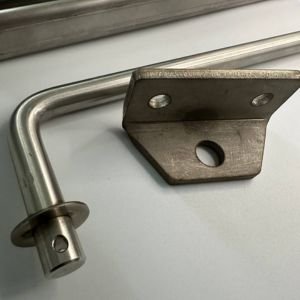
Case Study: Heavy-Duty Stainless Steel 304 Door Stays for Outdoor Enclosures
In outdoor and industrial environments, enclosure doors are frequently exposed to wind loads, repeated operation, and mechanical stress. Standard door stays often fail over time due to insufficient material thickness and weak load-bearing components.
To address this, we developed a reinforced stainless steel 304 door stay, specifically engineered to provide reliable door limitation while significantly improving load capacity and durability.
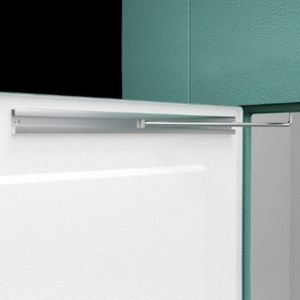
The Challenge
Many conventional door stays on the market are manufactured from thin sheet metal, leading to:
- Deformation under load
- Reduced lifespan in outdoor conditions
- Instability during operation
- Increased stress on hinges and locking systems
The runner component is particularly vulnerable, as it absorbs the majority of operational force when opening and limiting the door.
Here you can check the door stay operation cycle, how it should work properly: https://youtu.be/X5cOKfdZZ5k
Our Engineering Solution
We redesigned the door stay with a focus on structural strength and load distribution:
- Manufactured from thick stainless steel 304 sheet
- Reinforced runner – thicker than market average for improved load handling
- Optimised geometry for smooth and controlled movement
- Improved resistance to deformation under repeated use
This approach ensures consistent performance even in demanding outdoor applications.
Performance in Real Applications
Our door stays are widely used in:
- Electrical enclosures
- Telecommunication cabinets
- Control panels
- Utility and infrastructure boxes
By limiting door opening angles, they:
- Prevent hinge overload
- Improve operator safety
- Reduce long-term maintenance costs
Comparison Table – Door Stay Variants
| Model | Base Length (mm) | Runner Length (mm) | Runner Thickness (mm) |
|---|---|---|---|
| FY1800-0101-MC | 260 | 228 | 4.0 |
| FY450-4.SS | 230 | 227 | 4.0 |
| FY300.UNI | 300 | 190 | 12.0 |
| FY500.UNI | 500 | 310 | 12.0 |
Note: Increased runner thickness directly improves load capacity and resistance to deformation.
System Integration
For complete enclosure performance, our door stays are designed to work seamlessly with other stainless steel hardware:
- Stainless Steel Hinges – for structural support
- Stainless Steel Swinghandles – for secure access
- Cam Locks – for reliable locking
- Sealing Profiles & Gaskets – for environmental protection
Compliance & Quality Assurance
Our products are manufactured in line with recognised industry requirements:
- UKCA Marking – compliance with UK safety regulations
- BSI Standards – ensuring consistent quality and reliability
This ensures suitability for professional and industrial applications.
Material Disclaimer
Stainless steel 304 provides excellent corrosion resistance for most outdoor environments. However, for marine, coastal, or high-salinity environments, we recommend using stainless steel 316 for enhanced protection against chloride corrosion.
Conclusion
By focusing on critical load-bearing components such as the runner, we have developed a door stay that outperforms standard market solutions in durability, stability, and long-term reliability.
This makes it an ideal choice for demanding outdoor enclosure applications where performance and safety cannot be compromised.
FAQ
Why is the runner thickness important?
The runner carries most of the load during operation. Increasing its thickness improves strength, reduces deformation, and extends the product lifespan.
Is stainless steel 304 suitable for outdoor use?
Yes, it offers good corrosion resistance for most environments, making it ideal for general outdoor applications.
Can this door stay be used with heavy enclosure doors?
Yes, the reinforced design and thicker material make it suitable for heavier doors compared to standard door stays.
Do I need compatible hardware?
Yes, using high-quality hinges, locks, and sealing systems ensures optimal performance and durability of the enclosure.
When should I choose stainless steel 316?
316 grade is recommended for marine, coastal, or chemically aggressive environments where higher corrosion resistance is required.
Andriy Alyeksyeyev (Author)

Andriy Alyeksyeyev is a dedicated hardware supplier and manufacturer, serving as the Chief Executive Officer of multiple companies specializing in industrial hardware solutions.
1. Factory Yard Limited
Based in Derbyshire, United Kingdom, Factory Yard Limited focuses on providing a wide range of industrial hardware components. Their product offerings include:Компас
-
Industrial Locks: Cam locks, quarter-turn locks, swing handles, mailbox locks, stainless steel locks, latch locks, code locks, electronic locks, and drawer locks.
-
Industrial Hinges: Butt hinges, concealed hinges, continuous hinges, stainless steel hinges, corner hinges, and side hinges.
-
Handles: Grip handles, pull handles, carry handles, spring handles, and stainless steel handles.
-
Latches: Toggle latches, stainless steel latches, and slam latches.
-
Gaskets: Adhesive gaskets, edge protection, and sealing profiles.
2. RZ-market (LLC "Osnova-Market")
Located in Kharkiv, Ukraine, RZ-market specializes in the wholesale of industrial hardware. Under Andriy Alyeksyeyev's leadership, the company offers:РЗ-Маркет+1РЗ-Маркет+1РЗ-Маркет+1
-
Industrial Hardware: Locks, hinges, handles, door seals, stainless steel products, accessories for metal cabinets, industrial wheels, drawer runners, and leveling feet.
-
Electrical Hardware: Busbar connectors, cable ducts, cable fasteners, cable glands, cable markers, cable terminals, cable ties, crimping tools, electrical wire connectors, industrial LED signal lights, insulating tape, neutral bus bars, rocker switches, spiral cable wraps, terminal blocks, wire terminals, and heat shrink tubing.
-
Door Furniture: Door closers, fire-rated door hardware, cylinders, door locks, and door handles.
RZ-market serves a broad spectrum of industries, including manufacturing, electrical engineering, and transportation. For detailed product information, visit their website: rz-market.com
3. Working Principles of Andriy Alyeksyeyev
- Efficiency - all the projects must be efficient for both our clients and ourselves, based on win-win approach
- Valuability - understanding and approaching the values of every client
- Unity - customer first, reaching all the clients goals to make him happy
Through these enterprises, Andriy Alyeksyeyev demonstrates a strong commitment to delivering high-quality hardware solutions across diverse industries and markets.