
Quarter-Turn Locks Inserts: Types and Applications
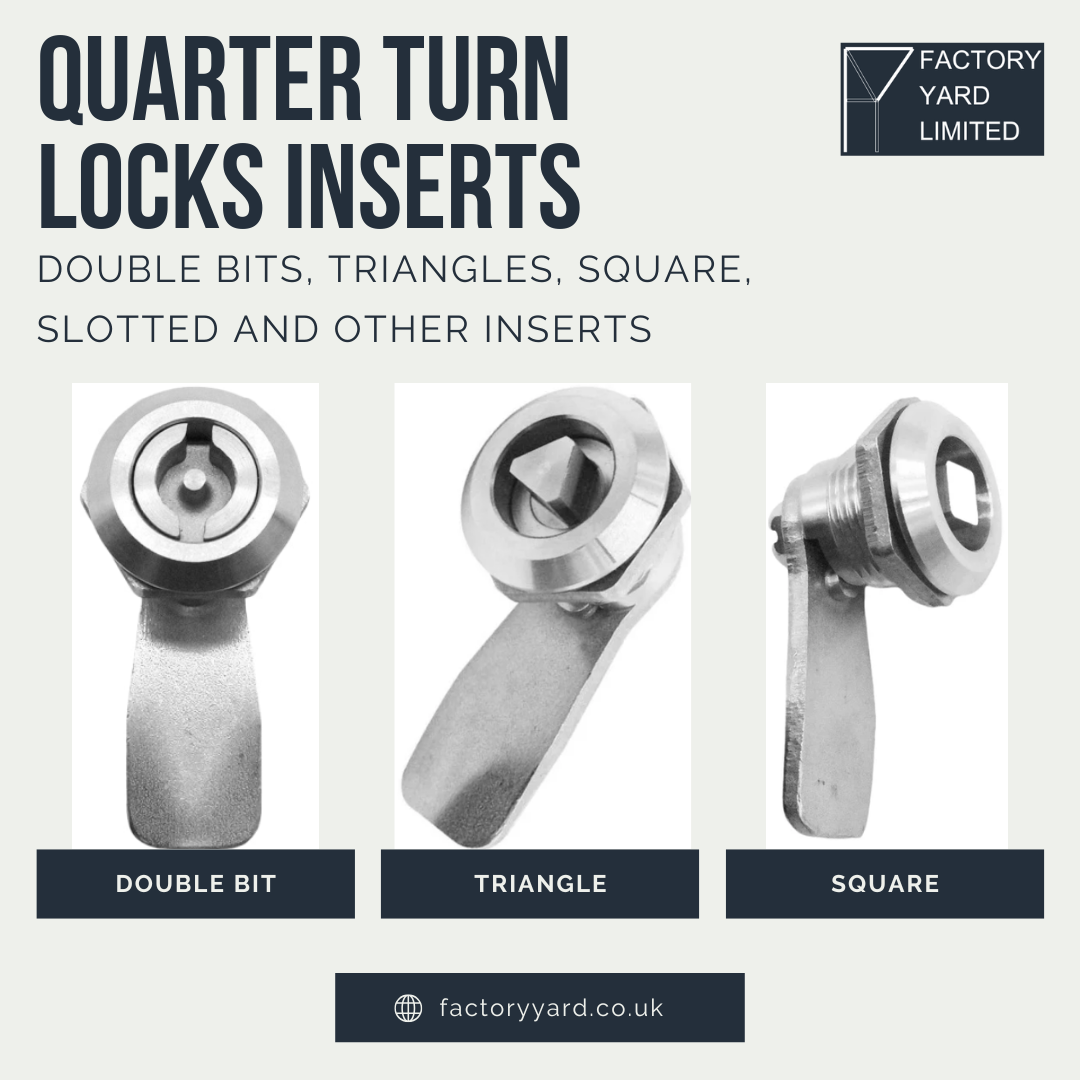
Quarter-Turn Latch Inserts Explained: Types, Applications and Selection for Industrial Cabinets and Enclosures
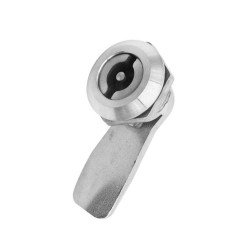
Quarter-turn latches are widely used in industrial enclosures because of their simplicity, reliability, and fast access. While the latch body and fixing hole can remain the same, the insert type determines who can access the enclosure, how secure it is, and where it should be used.
Selecting the correct insert is a key part of enclosure design, especially for electrical, telecom, utility, and outdoor applications.
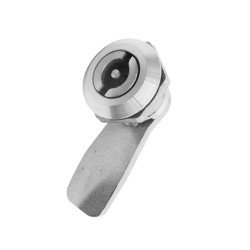
1. Double-Bit Insert
Application:
Electrical cabinets, control panels, industrial enclosures
Why use it:
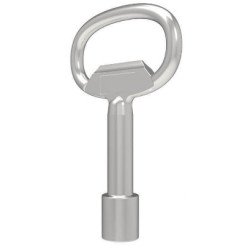
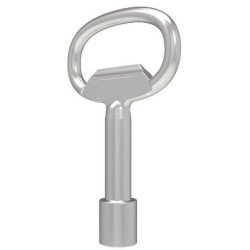
The double-bit insert is one of the most common solutions for controlled access. It requires a dedicated double-bit key, making it suitable for trained personnel only.
Advantages:
-
Good security level
-
Standardised across many industries
-
Widely accepted for electrical enclosures
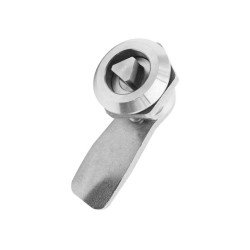
2. Triangle Insert
Application:
Utility cabinets, street furniture, infrastructure enclosures
Why use it:
Triangle inserts are commonly used by municipalities and utility companies. Service teams carry standardized triangle keys, allowing fast and secure access in public environments.
Advantages:
-
Standard utility access
-
Good balance between security and accessibility
-
Ideal for outdoor and public installations
3. Square Insert
Application:
Industrial machinery, control panels, service enclosures
Why use it:
Square inserts are popular in industrial settings where maintenance teams use standard tools. They offer simple operation and good mechanical strength.
Advantages:
-
Robust and durable
-
Easy access for maintenance teams
-
Suitable for indoor and industrial environments
4. Slotted Insert
Application:
Low-security cabinets, internal enclosures, service panels
Why use it:
Slotted inserts allow access with a flat screwdriver or tool. They are best used where quick access is required and security is not critical.
Advantages:
-
Fast and easy operation
-
Cost-effective solution
-
Ideal for non-critical access points
5. Hex (Allen) Insert
Application:
Industrial equipment, machine housings, OEM assemblies
Why use it:
Hex inserts require an Allen key, adding a basic level of access control while remaining easy for technicians to use.
Advantages:
-
Compact design
-
Better security than slotted inserts
-
Clean industrial appearance
6. Wing Insert
Application:
Service panels, maintenance hatches, light-duty enclosures
Why use it:
Wing inserts can be operated by hand, without tools. They are suitable where frequent access is needed and security is not a concern.
Advantages:
-
Tool-free operation
-
Fast opening and closing
-
Ideal for internal access
7. Special and Custom Inserts
Application:
Project-specific enclosures, OEM designs, restricted access systems
Why use it:
Custom inserts allow manufacturers to control access while keeping the same quarter-turn latch body and cut-out. This is useful for branded or restricted-access projects.
Advantages:
-
Tailored access control
-
Standard latch body, custom security
-
Flexible design options
Choosing the Right Insert for Your Enclosure
When selecting a quarter-turn latch insert, consider:
-
Required security level
-
Indoor or outdoor installation
-
Public or restricted access
-
Frequency of opening
-
Industry standards or utility requirements
By choosing the correct insert, manufacturers can standardize enclosure designs while controlling access efficiently and safely.
Conclusion
Quarter-turn latch inserts play a crucial role in enclosure security and usability. From high-control double-bit inserts to utility triangle keys and simple slotted access, each insert type serves a specific purpose.
Understanding these options allows enclosure manufacturers to design smarter, safer, and more efficient locking systems without changing the latch body or fixing hole.
Products


Andriy Alyeksyeyev (Author)

Andriy Alyeksyeyev is a dedicated hardware supplier and manufacturer, serving as the Chief Executive Officer of multiple companies specializing in industrial hardware solutions.
1. Factory Yard Limited
Based in Derbyshire, United Kingdom, Factory Yard Limited focuses on providing a wide range of industrial hardware components. Their product offerings include:Компас
-
Industrial Locks: Cam locks, quarter-turn locks, swing handles, mailbox locks, stainless steel locks, latch locks, code locks, electronic locks, and drawer locks.
-
Industrial Hinges: Butt hinges, concealed hinges, continuous hinges, stainless steel hinges, corner hinges, and side hinges.
-
Handles: Grip handles, pull handles, carry handles, spring handles, and stainless steel handles.
-
Latches: Toggle latches, stainless steel latches, and slam latches.
-
Gaskets: Adhesive gaskets, edge protection, and sealing profiles.
2. RZ-market (LLC "Osnova-Market")
Located in Kharkiv, Ukraine, RZ-market specializes in the wholesale of industrial hardware. Under Andriy Alyeksyeyev's leadership, the company offers:РЗ-Маркет+1РЗ-Маркет+1РЗ-Маркет+1
-
Industrial Hardware: Locks, hinges, handles, door seals, stainless steel products, accessories for metal cabinets, industrial wheels, drawer runners, and leveling feet.
-
Electrical Hardware: Busbar connectors, cable ducts, cable fasteners, cable glands, cable markers, cable terminals, cable ties, crimping tools, electrical wire connectors, industrial LED signal lights, insulating tape, neutral bus bars, rocker switches, spiral cable wraps, terminal blocks, wire terminals, and heat shrink tubing.
-
Door Furniture: Door closers, fire-rated door hardware, cylinders, door locks, and door handles.
RZ-market serves a broad spectrum of industries, including manufacturing, electrical engineering, and transportation. For detailed product information, visit their website: rz-market.com
3. Working Principles of Andriy Alyeksyeyev
- Efficiency - all the projects must be efficient for both our clients and ourselves, based on win-win approach
- Valuability - understanding and approaching the values of every client
- Unity - customer first, reaching all the clients goals to make him happy
Through these enterprises, Andriy Alyeksyeyev demonstrates a strong commitment to delivering high-quality hardware solutions across diverse industries and markets.