
Understanding Lock Parts and Lock Types for Industrial and Enclosure Applications
When choosing a locking solution for industrial enclosures, cabinets, machinery, or outdoor equipment, it’s important to understand what a lock is actually made of. Every reliable lock is not just a single part—it is a system of precisely engineered components working together to deliver security, stability, and long-term durability.
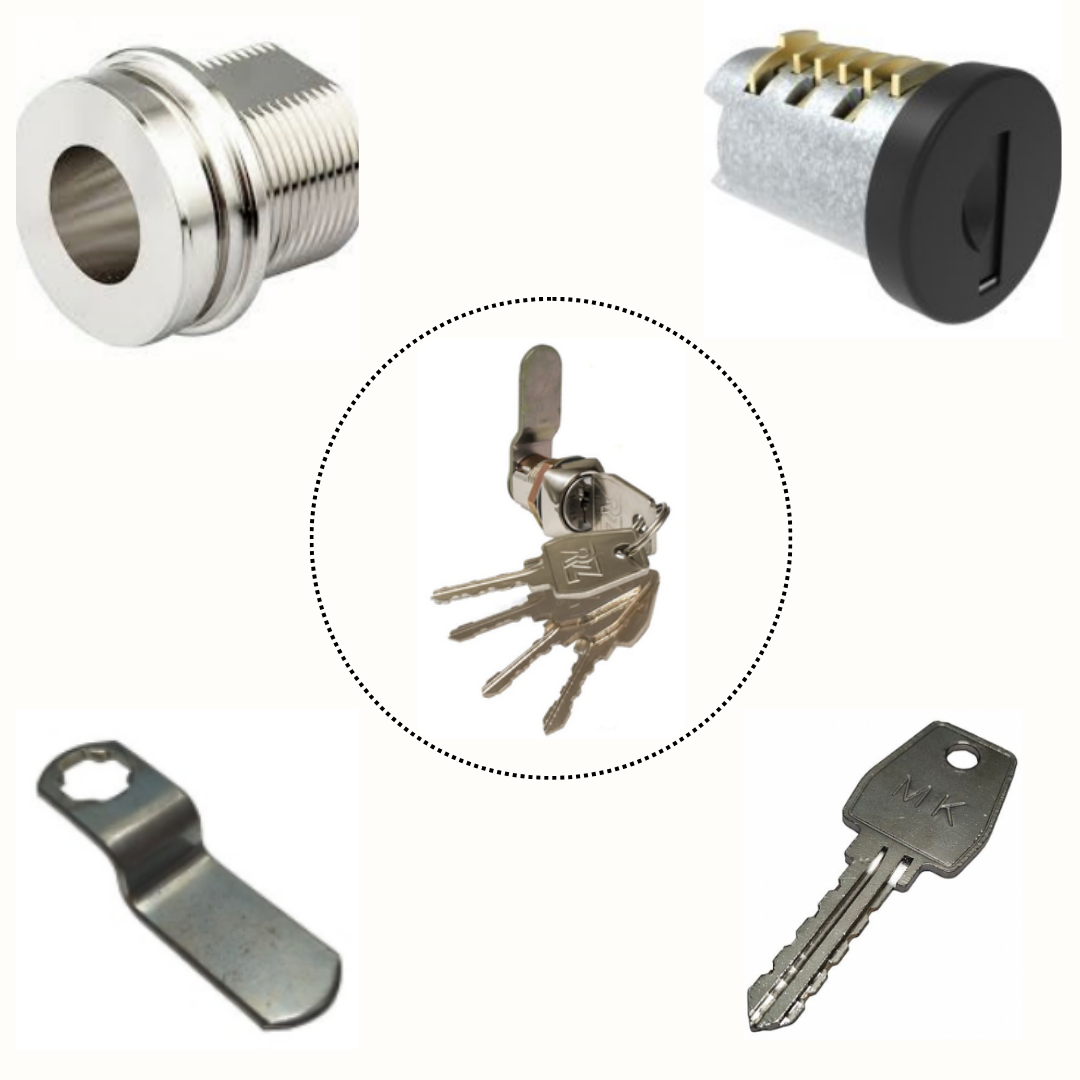
A standard enclosure lock generally consists of four key elements: housing, insert, cam, and key. Each of these parts has its own function and role in performance, sealing, and security level.
Main Components of a Lock
1. Housing
The housing is the main body of the lock.
It holds all internal components in place and ensures structural strength. Housing material defines durability, corrosion resistance, and suitability for outdoor or harsh environments. Common materials include stainless steel, zinc alloy, and engineering plastics, depending on application needs.
2. Insert
The insert is the element that interacts with the key or tool.
It determines how the lock is operated and what level of access control is required. Inserts are available in many shapes such as double bit, triangular, square, slotted, hexagon and many others. The right insert is chosen based on security level, accessibility needs, and industry standards.
3. Cam
The cam is the locking arm positioned on the inside of the enclosure.
When the key or insert is turned, the cam rotates and either engages or disengages with the frame, providing secure closure. Cams can differ in size, offset, shape, thickness, and bending angle depending on the door design, sealing requirements, and compression needs.
4. Key
The key provides controlled access.
Depending on the lock type, keys may be standard double-bit keys, uniquely coded keys, or removable inserts. Keys work together with inserts and housing tolerances to ensure security, repeatability, and reliability.
Types of Locks Used in Enclosures and Industrial Applications
There are many lock types, and each one is designed for a specific purpose, environment, and security level. The most common include:
-
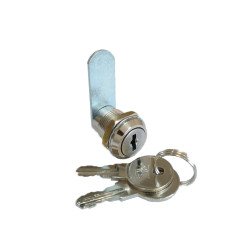
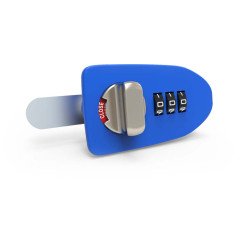
Quarter-Turn Locks / Cam Locks
Simple, reliable, widely used for cabinets, panels, and enclosures. -
Compression Locks
Provide additional sealing, vibration resistance, and tight door closure. -
Swinghandles
Used where ergonomic opening, modern design, and multi-point locking may be required. -
L-Handles and T-Handles
Suitable for heavy-duty industrial doors and larger cabinets. -
Padlockable Locks and Hasp Locks
Provide extra mechanical protection and external security control.
Why Details Matter
Choosing the correct lock is not only about design preference. Correct component selection influences:
-
Security level
-
Weather and corrosion resistance
-
Mechanical stability
-
Vibration resistance
-
Ease of use
-
Compliance with industry standards
Understanding how each part works helps manufacturers select the right solution for every enclosure project.
Products




Andriy Alyeksyeyev (Author)

Andriy Alyeksyeyev is a dedicated hardware supplier and manufacturer, serving as the Chief Executive Officer of multiple companies specializing in industrial hardware solutions.
1. Factory Yard Limited
Based in Derbyshire, United Kingdom, Factory Yard Limited focuses on providing a wide range of industrial hardware components. Their product offerings include:Компас
-
Industrial Locks: Cam locks, quarter-turn locks, swing handles, mailbox locks, stainless steel locks, latch locks, code locks, electronic locks, and drawer locks.
-
Industrial Hinges: Butt hinges, concealed hinges, continuous hinges, stainless steel hinges, corner hinges, and side hinges.
-
Handles: Grip handles, pull handles, carry handles, spring handles, and stainless steel handles.
-
Latches: Toggle latches, stainless steel latches, and slam latches.
-
Gaskets: Adhesive gaskets, edge protection, and sealing profiles.
2. RZ-market (LLC "Osnova-Market")
Located in Kharkiv, Ukraine, RZ-market specializes in the wholesale of industrial hardware. Under Andriy Alyeksyeyev's leadership, the company offers:РЗ-Маркет+1РЗ-Маркет+1РЗ-Маркет+1
-
Industrial Hardware: Locks, hinges, handles, door seals, stainless steel products, accessories for metal cabinets, industrial wheels, drawer runners, and leveling feet.
-
Electrical Hardware: Busbar connectors, cable ducts, cable fasteners, cable glands, cable markers, cable terminals, cable ties, crimping tools, electrical wire connectors, industrial LED signal lights, insulating tape, neutral bus bars, rocker switches, spiral cable wraps, terminal blocks, wire terminals, and heat shrink tubing.
-
Door Furniture: Door closers, fire-rated door hardware, cylinders, door locks, and door handles.
RZ-market serves a broad spectrum of industries, including manufacturing, electrical engineering, and transportation. For detailed product information, visit their website: rz-market.com
3. Working Principles of Andriy Alyeksyeyev
- Efficiency - all the projects must be efficient for both our clients and ourselves, based on win-win approach
- Valuability - understanding and approaching the values of every client
- Unity - customer first, reaching all the clients goals to make him happy
Through these enterprises, Andriy Alyeksyeyev demonstrates a strong commitment to delivering high-quality hardware solutions across diverse industries and markets.