
How to Identify High-Quality Stainless Steel Hinges for Cabinets | Industrial Hardware Guide
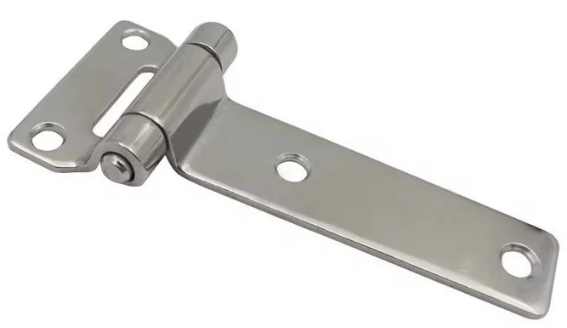
Stainless Steel Hinges for Cabinets: What Defines High Quality?
Stainless steel hinges play a critical role in industrial cabinets, equipment enclosures, commercial vehicles, and storage systems. The quality of a hinge directly affects the durability, safety, and reliability of the entire enclosure system.
In professional cabinet design, hinges must operate smoothly while supporting heavy doors and maintaining alignment under frequent use. High-quality stainless steel hinges are engineered to perform reliably in demanding environments while working seamlessly with other cabinet hardware such as swinghandles, industrial handles, and locking systems.
At Factoryyard, stainless steel hinges are part of a complete enclosure hardware ecosystem that also includes:
Together these components form a reliable industrial cabinet access system used in manufacturing, transport, and commercial installations.
1. Stainless Steel Grade: 304 vs 316
One of the most important characteristics of a high-quality hinge is the grade of stainless steel used in manufacturing.
304 Stainless Steel Hinges
304 stainless steel is the most commonly used material for cabinet hinges due to its strong balance between durability and corrosion resistance.
Typical characteristics include:
-
Excellent resistance to oxidation
-
Good performance in indoor and outdoor environments
-
High strength and structural stability
-
Cost-efficient industrial solution
Under UK and European standards, stainless steels are defined by BS EN 10088, maintained by the British Standards Institution.
Official reference:
https://www.bsigroup.com
304 stainless steel (material number 1.4301) typically contains:
-
approximately 18% chromium
-
approximately 8% nickel
This composition creates the protective oxide layer responsible for the corrosion resistance of stainless steel hardware.
316 Stainless Steel Hinges (Marine Grade)
For harsh environments, 316 stainless steel hinges offer superior corrosion resistance.
These hinges are commonly used in:
-
marine equipment
-
food processing machinery
-
chemical environments
-
coastal installations
-
outdoor industrial cabinets
316 stainless steel contains molybdenum, which significantly improves resistance to:
-
saltwater corrosion
-
chlorides
-
aggressive industrial environments
The material classification 1.4401 / 1.4404 is also defined under BS EN 10088.
Additional regulatory and product compliance information can be found via UK guidance:
https://www.gov.uk
Because of these properties, 316 hinges are often called marine-grade hinges.
2. Corrosion Resistance
A defining characteristic of high-quality stainless steel hinges is their ability to resist corrosion over long periods.
Low-quality hinges may develop rust due to:
-
inferior stainless alloys
-
contamination during manufacturing
-
poor finishing processes
Professional hinge manufacturers apply:
-
controlled alloy composition
-
surface passivation
-
high-precision finishing
These processes ensure hinges maintain structural integrity even in humid, outdoor, or industrial environments.
3. Precision Engineering and Smooth Operation
High-quality cabinet hinges are manufactured with tight tolerances that ensure smooth and reliable movement.
Important engineering features include:
-
precisely aligned mounting holes
-
accurate hinge pin dimensions
-
uniform knuckle geometry
-
consistent stainless steel thickness
These features prevent common issues such as:
-
door misalignment
-
friction during opening
-
premature hinge wear
When properly manufactured, stainless steel hinges can withstand thousands of operating cycles without performance degradation.
4. Load Capacity and Structural Strength
Industrial cabinets and equipment enclosures often require hinges capable of supporting heavy doors and panels.
Structural strength depends on several design factors:
-
stainless steel thickness
-
hinge pin diameter
-
knuckle reinforcement
-
hinge length
For example, continuous hinges distribute weight across the entire door height, improving load distribution and durability.
In many industrial installations, hinges work together with stainless steel swinghandles and locking systems to create secure cabinet access points.
5. Surface Finish and Passivation
Surface finishing affects both corrosion resistance and appearance.
Professional stainless steel hinges are typically available with finishes such as:
-
brushed stainless steel
-
polished stainless steel
-
passivated surfaces
Passivation is a chemical treatment that removes microscopic iron particles from the metal surface and enhances the formation of the protective chromium oxide layer.
This improves corrosion resistance and helps maintain a clean industrial look over time.
6. Integration With Cabinet Hardware Systems
Industrial cabinet hinges are rarely used alone. They operate together with other enclosure components such as:
-
swinghandles for secure door closing
-
cabinet handles for ergonomic operation
-
industrial cabinet locks for controlled access
This integrated approach ensures that cabinet doors remain secure, accessible, and reliable even in demanding environments such as transportation equipment, electrical cabinets, and industrial machinery.
Choosing Reliable Stainless Steel Cabinet Hinges
When selecting stainless steel hinges for cabinets, professionals should always evaluate:
✔ stainless steel grade (304 or 316)
✔ corrosion resistance for the operating environment
✔ precision manufacturing quality
✔ load-bearing capacity
✔ compatibility with locking and handle systems
High-quality hinges provide long-term durability, smooth movement, and corrosion protection, making them essential components of professional cabinet hardware systems.
Blog Related Article
Andriy Alyeksyeyev (Author)

Andriy Alyeksyeyev is a dedicated hardware supplier and manufacturer, serving as the Chief Executive Officer of multiple companies specializing in industrial hardware solutions.
1. Factory Yard Limited
Based in Derbyshire, United Kingdom, Factory Yard Limited focuses on providing a wide range of industrial hardware components. Their product offerings include:Компас
-
Industrial Locks: Cam locks, quarter-turn locks, swing handles, mailbox locks, stainless steel locks, latch locks, code locks, electronic locks, and drawer locks.
-
Industrial Hinges: Butt hinges, concealed hinges, continuous hinges, stainless steel hinges, corner hinges, and side hinges.
-
Handles: Grip handles, pull handles, carry handles, spring handles, and stainless steel handles.
-
Latches: Toggle latches, stainless steel latches, and slam latches.
-
Gaskets: Adhesive gaskets, edge protection, and sealing profiles.
2. RZ-market (LLC "Osnova-Market")
Located in Kharkiv, Ukraine, RZ-market specializes in the wholesale of industrial hardware. Under Andriy Alyeksyeyev's leadership, the company offers:РЗ-Маркет+1РЗ-Маркет+1РЗ-Маркет+1
-
Industrial Hardware: Locks, hinges, handles, door seals, stainless steel products, accessories for metal cabinets, industrial wheels, drawer runners, and leveling feet.
-
Electrical Hardware: Busbar connectors, cable ducts, cable fasteners, cable glands, cable markers, cable terminals, cable ties, crimping tools, electrical wire connectors, industrial LED signal lights, insulating tape, neutral bus bars, rocker switches, spiral cable wraps, terminal blocks, wire terminals, and heat shrink tubing.
-
Door Furniture: Door closers, fire-rated door hardware, cylinders, door locks, and door handles.
RZ-market serves a broad spectrum of industries, including manufacturing, electrical engineering, and transportation. For detailed product information, visit their website: rz-market.com
3. Working Principles of Andriy Alyeksyeyev
- Efficiency - all the projects must be efficient for both our clients and ourselves, based on win-win approach
- Valuability - understanding and approaching the values of every client
- Unity - customer first, reaching all the clients goals to make him happy
Through these enterprises, Andriy Alyeksyeyev demonstrates a strong commitment to delivering high-quality hardware solutions across diverse industries and markets.